안녕하세요, 금주은입니다. 23년 11월에 Love Killa 덕에 많은 몬스타엑스의 노래를 들었습니다. 그중에 한 곡이 셔누X형원의 ‘Love Me A Little’이었는데, 이 곡이 너무 좋아서 메인 벨소리로 몇 달을 사용했습니다. 마음에 드는 노래를 벨소리로 지정 한 것이 별 거 아닌 일이라고 생각하시겠죠? 그러나 저에게는 굉장히 큰 사건이었습니다. 이 이야기는 오늘 쓸 내용과 별 상관이 없으니 다음에 다시 재미있게 써 보도록 하고요, 오늘은 결국 통합되지 못한 자아와 무의식의 안타까운 서사의 Love me a Litle에 대해 제 관점으로 이야기를 해 나가겠습니다.
『Love Me A Little』
자아, 왜 무의식의 요청을 거절했는가?
이 노래는 여러 번 듣지 않아도 직관적으로 가사가 어떤 의미인지 쉽게 다가오는 곡입니다. 형원 님의 영상을 보니, 내가 모든 것을 맞춰줄 테니 나를 사랑해 달라는 내용이라고 설명을 하셨던데, 작사 작곡을 하셨으니 누구보다 이 곡의 의도를 잘 아시겠지요. ‘내가 사랑하는 사람을 위해 머리 끝부터 발끝뿐만 아니라 의식과 무의식까지도 다 뜯어 고치겠다’는 의미입니다. 저는 이 노래를 처음 들었을 때부터 자동으로 ‘자아’에 대입해서 머리속에 각인되었던 노래입니다.
자아의 고백:
“거울에 비친 내 모습 뒤로 한 채”
“너만의 나를 마주해 (I never seen)”
이 가사에서 보이는 ‘거울’은 통상적인 자기 인식의 상징입니다. 우리가 사회에서 살아가기 위해 쓰는 ‘가면’ 혹은 자아를 비추는 도구이기도 하죠. 그런데 이 노래에서는 그 거울을 “뒤로 한 채”라고 합니다. 이는 자신의 진짜 모습을 외면하고, 누군가가 원하는 모습에 맞춰 바뀌려는 내면의 결심처럼 읽힙니다. 이 노래는 “내가 너에게 다 맞출 테니, 나를 조금만 더 사랑해달라”는 메시지를 담고 있기에, 이 가사는 자기 본연의 자아를 내려놓고 타인의 기대에 부응하려는 선택, 그리고 그 과정에서 잃어버린 ‘진짜 나’를 암시합니다. 그래서 오히려 질문이 생깁니다. 그렇다면 잃어버린 ‘나’는 어디에 있는 것인가?
자아의 패턴:
“널 위한 감정 조각 하날 챙겨 매일”
“새로운 내게 기댄 채 (get more insane)”
자기를 잃어버린 자아는 부지런하기도 합니다. 매일 ‘널 위한 감정 조각’을 챙기기까지 하네요. 이 가사는 매일 감정을 일부러 꺼내어 준비한다는 느낌을 줍니다. 이는 반응에 가깝습니다. 너무 오랜 시간 타인의 감정에 반응하며 살아온 사람은, 타인을 위해 ‘준비된 감정’을 꺼내려고 내면의 고통을 억압하는 데 익숙합니다. 그래서 ‘감정 조각을 챙긴다’는 표현은 감정을 느끼는 것이 아니라 연출하고 소비하는 방식을 의미하죠. 이런 행위는 타인에게 사랑받기 위해 체득한 감정의 노동이며, 자아의 자동화된 자기희생입니다.
이어지는 “새로운 내게 기댄 채”라는 구절은 그렇게 만들어진 또 하나의 자아, 즉 외부의 사랑과 생존을 위한 ‘새로운 나’ 위에 기대고 있다는 뜻입니다. 그 ‘새로운 나’는 내가 원해서 만들어낸 내가 아니라, 외부에 맞춰서라도 사랑받기 위해 만들어진 가면 같은 존재입니다. 이어지는 “get more insane”이라는 표현은 그 왜곡된 자아에 의지한 삶의 피로와 무너짐을 드러냅니다. 조용히, 매일 조금씩 미쳐가는 삶. 자아가 소리 없이 미처가는 장면입니다.
자아의 위기:
“깊어진 상처 사이를 파고든 네 gaze”
“한숨에 날 삼킨 poison (more or less)”
여기서 등장하는 ‘gaze’는 상대의 시선이기도 하지만, 나 자신에 대한 시선일 수도 있습니다. ‘깊어진 상처’는 내가 나를 버리고 상대에게 온전히 맞추려 애썼던 흔적, 그 과정에서 남은 마음의 흉터입니다. 상대의 gaze는 어쩌면 그저 바라봄에 불과했지만, 이미 상처 입은 자아는 그 시선조차 날카롭게 받아들입니다. 다시 말해, 상대가 나를 아프게 한 게 아니라, 내가 이미 나를 지우는 선택을 했기에 스스로 더 깊은 상처를 만든 것일지도 모릅니다.
그렇게 만들어진 상처 속으로 스며든 것은 타인의 시선이 아니라, 자신에 대한 혐오이기도 하죠. ‘poison’ 역시 누군가가 먹인 게 아니라, 내가 스스로 들이마신 독입니다. 자기가 마셨으면서 ‘한숨에 날 삼킨다’라고 표현한 것은 그 자각의 순간에도 어쩔 수 없이 무기력하게 무너지는 자아의 모습이자, 이제는 멈춰야 한다는 무의식의 신호입니다.
무의식의 반복과 좌절:
“Du-du-du-du-du-du-du-du / Love me a little, love me a little bit”
중간에 나오는 이 후렴은 저는 무의식이 자아에게 하는 말일 수도 있고, 자아가 외부 사랑을 갈구하는 말일 수도 있다고 생각합니다. 이 단순하고 반복적인 후렴은 일종의 주문처럼 들리는데, 이 반복은 무의식적인 소망의 표현입니다. 머릿속에서는 끊임없이 “나를 사랑해줘”라는 말을 외치고 있지만, 그것을 직접적으로 말할 수 없는 상황. 혹은 이미 너무 지쳐서 그렇게라도 내면의 고통을 달래고자 하는 절박함. 이 반복은 언어적 전달을 넘어서 감정의 리듬으로, 무의식의 심연에서 올라오는 간청입니다. 이렇게 무의식의 입장에서 봤을 때는 무의식의 소망이 받아들여지는 것이 아니라, 무시되고 외면 받게 됩니다. 심지어 이 요청은 자기 자신에 대한 요청이지만, 자아는 사랑받는 외형을 유지하기 위해 거절합니다.
자아의 입장에서 봤을 때는 끊임없이 외부에게 사랑을 갈구하는 모습입니다. 무의식의 목소리에는 이미 귀를 닫은 상태입니다. 이것이 어쩌면 ‘ Du-du-du-du-du-du-du-du ‘로 표현되었던 것일 수도 있습니다. 무의식이 무슨 말을 하건, 자아에게는 이렇게 들릴 뿐인 것이죠. 자아는 무의식의 요청을 듣지 못하게 되었으니 또 한 번의 자기 상실과 파괴를 향해 걸어갑니다.
자아의 착각:
“You got me every minute after hour”
“네 숨결에 난 잊지 못할 pleasure”
셔누 님의 파트인데 “You got me every minute after hour” 에 주목할 필요가 있습니다 . “You got me”는 “네가 나를 사로잡았다” 또는 “네 매력에 넘어갔다”는 뜻으로 자주 쓰입니다. 여기에 “every minute after hour”를 붙여 시간의 흐름 속에서 지속적으로, 그리고 끊임없이 상대방에게 영향을 받고 있거나 사로잡혀 있다는 것을 강조하는 표현으로 볼 수 있습니다. 마치 매 시간이 지나고 또 다른 시간이 시작될 때마다 계속해서 상대방의 영향을 받고 있다는 의미입니다. 이 문장은 애초에 자아가 무의식의 간청을 외면한 결과일 수도 있습니다. 즉, 자아가 무의식의 어떤 간청도 외면한 채 외부의 시선과 조건에 완벽히 부합하면 그것이 사랑이고 기쁨이라 착각한 결과가 이 한 문장인 것입니다.
‘네 숨결에 난 잊지 못할 pleasure’는 진짜 자신이 아닌 ‘타인의 기대에 맞춘 자아’로 살며 느끼는 일시적인 성취감, 그러나 결국 자기 상실로 향하는 쾌락일 수 있습니다. 그래서 이 다음 가사가 “뻔한 결말 속에 무너질 내게”로 이어지는 것이겠죠. 자아가 무의식의 요청을 거절하고 완벽히 외부를 선택한 대가로, 사실 자아 스스로 예측 가능한 자기 파괴의 결말을 향해가는 아이러니.
자아의 자각:
“뻔한 결말 속에 무너질 내게”
“Love me a little, love me a little bit”
‘뻔한 결말’은 자아가 외부 세상에 본인을 끼워 맞추려다 수없이 경험해온 좌절, 자기 비난, 자기 채찍, 그리고 외부의 기대에 맞추다 무너지는 반복된 감정 패턴입니다. 이 결말을 알고 있음에도, 여전히 벗어나지 못합니다.뒷 부분쯤에 나오는 “Love me a little, love me a little bit”은 앞 부분과 차이가 있어 보입니다. 이 말은 순전히 뻔한 결망 속에 무너질 자아-무의식에게는 어떻게 보면 또 하나의 ‘나’인 셈인데, 이 또 하나의 나에게 보내는 마지막 간청이자 절규로 들립니다. 몽환적이고 슬픈 멜로디 속에서 이 후렴은 희망이라기보다 고통의 반복처럼 들리며, 자아는 또 다시 이 간청을 받아들이지 못한 채 외부 세계의 사랑으로 향합니다.
즉, 이 결말은 무의식이 포기하지 않고 계속해서 자아에게 자신을 찾아달라는 요청을 하지만, 자아는 끝내 망설이고 거절하는 장면입니다. 그리고 무너져 내렸습니다. 자아 자신의 예측대로. 이 파트에서 셔누 님과 형원 님의 무너지는 듯한 퍼포먼스가 정말 좋습니다. 오로지 제 상상이 아니라 시각적으로 극대화된 퍼포먼스를 보면서 이 가사의 의미가 제게 더 확고히 와 닿았습니다.
어두운 색조의 그림으로, 한 인물의 머리가 가로선으로 분리되어 두 부분으로 나뉘어 있습니다. 위쪽 부분에는 피부톤이 밝은 어린 소년의 옆모습이 눈을 감고 고요하게 그려져 있습니다. 아래쪽 부분은 훨씬 어두운 배경으로, 성인의 손이 배를 감싸고 있는 듯한 자세를 취하고 있습니다. 손 아래의 어둠 속에는 얼굴이 명확하게 보이지 않는 또 다른 형상이 희미하게 비치고 있습니다. 전체적으로 성장, 내면의 어린 시절, 혹은 의식과 무의식의 분리 및 연결을 암시하는 듯한 깊은 의미를 담고 있습니다. This is a darkly toned illustration depicting a human figure’s head divided into two parts by a horizontal line. The upper section features the serene profile of a young boy with light skin, his eyes closed. The lower section, set against a much darker background, shows an adult’s hands in a posture as if embracing their belly. A faint, obscured figure is dimly visible within the darkness beneath the hands, with no clear facial features. Overall, the image conveys a profound meaning, possibly hinting at themes of growth, the inner child, or the separation and connection between the conscious and unconscious mind.
자기 상실의 고통을 표현한 안무
이 노래에서는 안무를 반드시 짚고 넘어가야 합니다.
💬 초반 안무 – 형원 님의 눈과 입을 셔누 님이 가리는 장면이 인상 깊습니다. 자아가 외부의 시선에 맞추기 위해 본래의 감각과 표현을 스스로 억누르는 모습처럼 보입니다. 무의식은 자아에게 끊임없이 말을 걸으려 노력했겠지만, 자아는 스스로의 눈과 입을 막은 채 자신을 잃더라도 외부로부터 ‘사랑받는 나’를 선택했습니다. 이 장면이 바로 자기 억압의 시각적 메타포입니다.
💬 후반부를 장악하는 셔누와 형원의 안무 – 굉장히 격렬한 안무와 무겁게 내리치는 천둥 같은 화음이 몽환적인 음악과 어우러져 연출됩니다. 외부의 사랑을 갈구하며 타인의 기대에 맞춰 변화하려는 자아의 불안정한 모습, 자기 상실의 고통을 시각적으로 표현 한 것 같습니다. 특히, 자아의 노력이 일시적인 쾌락과 성취감을 가져다주지만, 결국 자기 파괴적인 결말을 향해 나아가는 아이러니를 고스란히 담고 있다고 느껴집니다. 안무에 셔누 님이 참여했다고 하는데, 같은 팀 동생인 형원 님이 만든 노래라 그런지, 노래를 잘 이해하고 만든 안무란 생각이 듭니다.
💬 2:53~:2:55 안무 – 아! 짧디 짧은 2초 사이에 무슨 일이 벌어졌던 걸까요? 먼저 유리 깨지는 소리가 들립니다. 이 소리는 후반부에 몇번 등장하는데, 바로 자아가 균열되는 소리입니다. 외부의 기대에 맞추려던 자아가 한계에 다다라 결국 붕괴되는 순간을 청각적으로 표현한 것같습니다. ‘페르소나’라는 말이 자주 인용되면서 얼굴에 쓰고 있던 가면에 금이 쫙 가면서 깨지는 이미지를 한번쯤 보셨을 거예요. 바로 이러한 장면이 떠오릅니다.
이 소리와 맞춰 셔누 님와 형원 님이 서로 마주보는 안무가 등장하는데 둘은 서로를 마주보며 반대편 팔을 뻗어 완벽히 대칭을 이룹니다. 닿을 듯 말 듯한 이 거리에서, 무의식은 끊임없이 자아게 손을 뻗지만, 자아는 가까이 다가가지 않고 딱 그만큼의 거리를 유지하려는 상태로 보입니다.
뒤이어 들리는 짧은 한숨소리는 스쳐 지나갈 법도 한데 굉장히 여운이 남습니다. 두 가지가 연상되기 때문입니다. 하나는 다가가지 못하는 자아가 문득 무의식을 감지한 것입니다. ‘외부의 숨결’이 아니라 오히려 그동안 억눌린 작은 자아의 감정이 일순간 새어나온 한숨으로 표현된 것일 수 있습니다. 다른 하나는 무의식의 한숨입니다. ‘역시..자아는 이번에도..’ 결국 외부를 택한 자아에 대한 마지막 절망의 표현이 이 한숨인 것 같습니다. 무대를 보신 분들은 아시겠지만, 결국 이 둘의 안무는 마지막까지도 완전한 통합에 이르지 못합니다. 자아와 무의식은 그렇게 서로에게서 등을 돌립니다.
💬 마지막 안무 : 셔누 님의 눈과 입이 가려지기 전, 셔누X형원은 서로 반대 방향을 바라보며 손을 뻗습니다. 자아와 무의식은 진짜 다른 길을 걷기로 했나 봅니다. 마지막으로 셔누 님의 감각이 완전히 사라집니다. 이제는 무의식이 자신의 언어를 닫고 깊은 침묵으로 들어간 상태가 됐습니다. 자아는 그렇게 고립되었습니다.
비극이네요.
비극은 여운이 깊게 오래 남습니다.
문득 K-POP에 음악과 노래뿐만 아니라 춤이 있어서 정말 다행이라는 생각이 듭니다. 곡에 대한 여러 감정을 느끼게 해 주고, 해석할 수 있는 공간을 넓혀 주니까요.
Love me a Little은 대중성과 예술성 사이의 교차점에서 놀라운 균형을 보이는 노래입니다. 겉으로는 몽환적이고 감각적인 퍼포먼스를 담고 있는 러브송이지만, 더 섬세하고 복잡한 자기 심리의 지형도가 숨어 있어 보이기 때문입니다. 상대에게 사랑받고 싶은 마음을 내세우긴 하지만, 사실 그 깊은 바닥에는 억눌림, 자기 불신, 자기 연민과 현대인의 불안, 자기애의 결핍, 완벽주의로 인한 자기 해체, 회복되지 못한 내면 아이의 외침까지 모두 켜켜이 층을 이루고 있습니다.
한마디로, 이 노래는 사랑받고 싶지만 자신을 믿지 못하는 자아가 끝내 외면해 버린 스스로에게 하는 고백같은 노래입니다. 단순히 ‘이 노래 좋다’라고 하기 보다, 제 개인적으로 이 곡은 자기 이해와 자기 돌봄에 대해 반문하는 음악적인 심리학 (더 나은 표현이 생각이 안 나네요)이라고 하고 싶습니다. 형원 님이 군 전역을 하셨으니,(제 생일 날이 전역날이더라고요) 이렇게 제 마음을 먹먹하게 하고, 아무 생각을 할 수 없게, 직관적으로 느낄 수밖에 없는, 그런 음악을 또 기대해도 되겠죠?
긴글을 차분히 읽어주셔서 감사합니다.
여기까지 읽으셨다는 건, 집중력이
좋다는 뜻입니다. ^^
[문의]
zuozhe0513@gmail.com
geumjooeun_insta DM
“Please note that this is an AI translation, and there may be nuances that differ from the original Korean text.”
MONSTA X, Shownu X Hyungwon’s Song”Love Me A Little”: The Ego’s Rejection of the Unconscious
Hello, I’m Geum Joo-eun. In November 2023, thanks to “Love Killa,” I listened to many of MONSTA X’s songs. Among them was Shownu X Hyungwon’s “Love Me A Little,” which I loved so much that I used it as my main ringtone for several months. You might think setting a favorite song as a ringtone is no big deal, right? But for me, it was a very significant event. This story isn’t very relevant to today’s topic, so I’ll write about it in a fun way next time. Today, I’d like to share my perspective on “Love Me A Little,” a poignant narrative of the ego and the unconscious that ultimately failed to integrate.
『Love Me A Little』
Why Did the Ego Reject the Unconscious’s Request?
This song is one that intuitively conveys its meaning without needing to be heard multiple times. I watched Hyungwon’s video, and he explained that the song is about asking someone to love him while he adjusts everything to their liking. As he wrote and composed it, he would know the song’s intent better than anyone. It means, “I will change everything, from head to toe, and even my conscious and unconscious, for the person I love.” From the first time I heard this song, it automatically imprinted itself in my mind as a song about the ‘ego.’
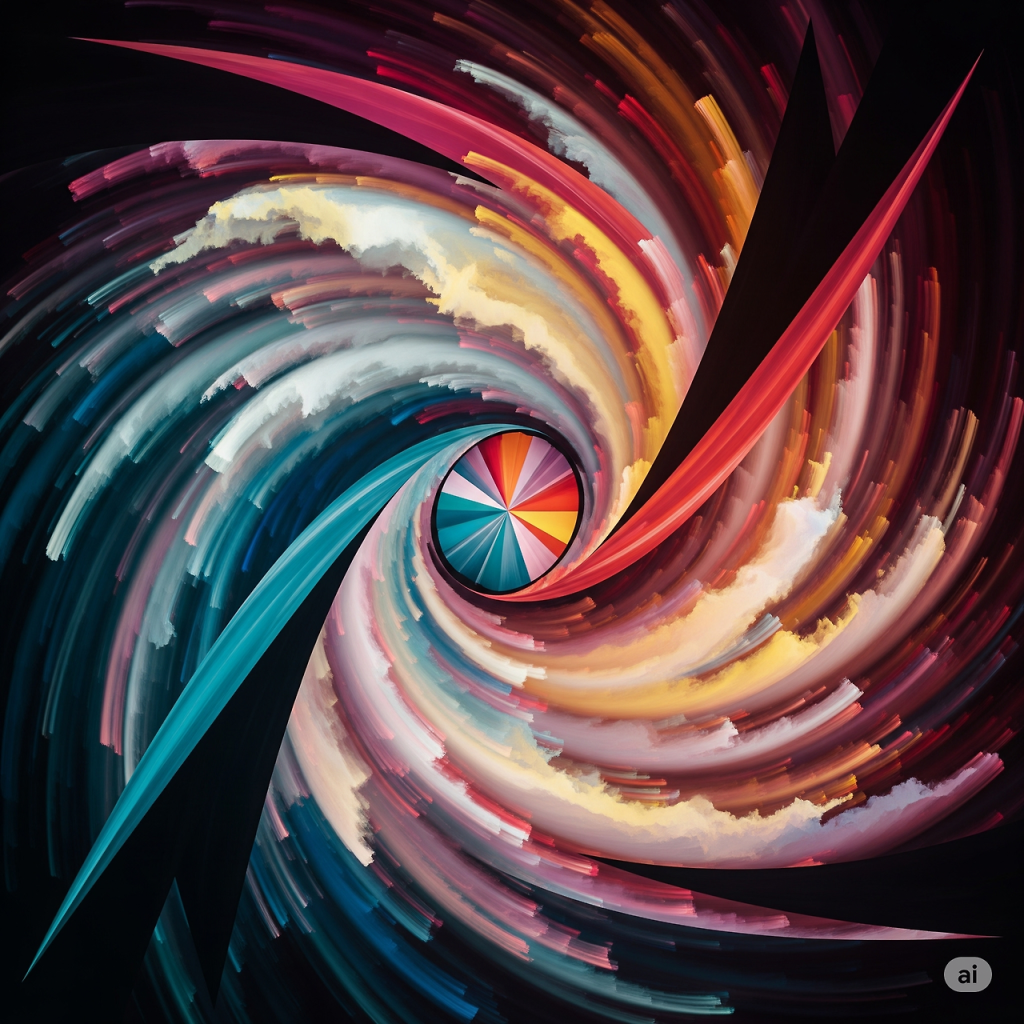
This is an abstract image featuring a vibrant swirl of colors against a dark background. Starting from a small central circle, diverse hues, predominantly reds, yellows, blues, pinks, and mints, violently extend outwards, forming a dynamic spiral pattern. Cool blue tones intertwine with warm red and yellow shades, creating a strong contrast that visually suggests complex inner emotions or the turbulent conflict between the ego and the unconscious.
The Ego’s Confession
“거울에 비친 내 모습 뒤로 한 채”(Turning away from my reflection in the mirror)
“너만의 나를 마주해 (I never seen)”( Facing only your version of me )
The ‘mirror’ in these lyrics typically symbolizes self-awareness. It can also be the ‘mask’ we wear to navigate society or a tool that reflects the ego. However, the song says “turning away from” that mirror. This reads like an inner decision to turn away from one’s true self and change to fit someone else’s desires. Since this song conveys the message, “I’ll adjust everything to you, just love me a little more,” these lyrics imply the choice to abandon one’s inherent self and conform to others’ expectations, and the ‘real me’ lost in that process. This, in turn, raises a question: Where, then, is the lost ‘me’?
The Ego’s Pattern
“널 위한 감정 조각 하날 챙겨 매일”( I pack a piece of emotion for you every day)
“새로운 내게 기댄 채 (get more insane)”(Leaning on a new me)
An ego that has lost itself can be quite diligent. It even ‘packs a piece of emotion’ for someone every day. These lyrics give the feeling of deliberately preparing and taking out emotions each day. This is closer to a reaction. People who have lived for too long reacting to others’ emotions are accustomed to suppressing inner pain to present ‘prepared emotions’ for others. Thus, the phrase ‘pack a piece of emotion’ signifies not feeling emotions, but rather producing and consuming them. This act is emotional labor, learned to be loved by others, and an automated self-sacrifice of the ego.
The following line, “Leaning on a new me,” means relying on another self that has been created, a ‘new me’ for external love and survival. This ‘new me’ is not a self I created out of desire, but a mask made to be loved, even if it means conforming to external demands. The subsequent phrase, “get more insane,” reveals the fatigue and breakdown of a life dependent on that distorted ego. A life quietly, subtly going insane each day. This is the ego’s silent descent into madness.
The Ego’s Crisis:
“깊어진 상처 사이를 파고든 네 gaze”(Your gaze piercing through my deep wounds)
“한숨에 날 삼킨 poison (more or less)”(A sigh swallowed me like poison)
The ‘gaze’ here can be the gaze of the other, but it can also be a gaze upon oneself. ‘Deep wounds’ are the traces of abandoning oneself and striving to perfectly conform to the other, the scars left on the heart in that process. The other’s gaze might have been merely looking, but the already wounded ego sharply perceives even that gaze. In other words, perhaps it wasn’t the other person who hurt me, but I myself created deeper wounds by choosing to erase myself. What seeped into those self-inflicted wounds was not the gaze of others, but also self-loathing. The ‘poison’ was also not something someone gave, but something I drank myself. The expression ‘swallowed me in a sigh’ despite drinking it oneself depicts the ego’s helpless collapse even at the moment of realization, and it’s a signal from the unconscious that it’s time to stop.
The Unconscious’s Repetition and Frustration
“Du-du-du-du-du-du-du-du”
“Love me a little, love me a little bit”
This simple, repetitive chorus sounds like a chant. This repetition is an expression of unconscious desire. In one’s mind, “love me” is constantly cried out, but it’s a situation where it cannot be said directly. Or perhaps it’s a desperate attempt to soothe inner pain, already too exhausted. This repetition transcends linguistic delivery, becoming an emotional rhythm, a plea rising from the depths of the unconscious. From the unconscious’s perspective, this desire is not accepted; instead, as the following lyrics show, it is ignored and disregarded. From the ego’s perspective, it’s a continuous yearning for external love, with its ears already closed to the voice of the unconscious. This might be why it’s expressed as ‘Du-du-du-du-du-du-du-du’. No matter what the unconscious says, to the ego, it sounds like this. Since the ego cannot hear the unconscious’s plea, it walks towards another self-loss and destruction.
The Ego’s Delusion:
“You got me every minute after hour”
“네 숨결에 난 잊지 못할 pleasure”(In your breath, an unforgettable pleasure)
We need to pay attention to Shownu’s part, “You got me every minute after hour.” “You got me” is often used to mean “you captivated me” or “I fell for your charm.” Adding “every minute after hour” emphasizes being continuously and ceaselessly influenced or captivated by the other person as time flows. It’s as if with every passing hour and the start of a new one, one continues to be under the other’s influence. This phrase might originally be the result of the ego ignoring the unconscious’s plea. That is, it’s the result of the ego mistakenly believing that perfectly conforming to external gazes and conditions, while ignoring any plea from the unconscious, equates to love and joy. ‘An unforgettable pleasure in your breath’ could be the temporary satisfaction felt while living as a ‘self tailored to others’ expectations,’ which ultimately leads to self-loss. This is why the next lyric is “To me, who will collapse in an obvious ending.” The irony is that the ego, by rejecting the unconscious’s request and choosing the external world, is knowingly heading towards a self-destructive ending that it itself can predict.
The Ego’s Realization
“뻔한 결말 속에 무너질 내게”(To me, who will collapse in an obvious ending)
“Love me a little, love me a little bit”(Love me a little, love me a little bit)
The ‘obvious ending’ refers to the ego’s repeated patterns of frustration, self-blame, self-chastisement, and collapse experienced from trying to fit itself into the external world. Even knowing this ending, it still cannot escape. The repeated “Love me a little, love me a little bit” is not, in my opinion, a request from the ego to the outside world. Instead, isn’t it the last plea and cry sent to the ego that will collapse in an obvious ending? Within the dreamy and sad melody, this chorus sounds less like hope and more like a repetition of pain, and the ego will likely enter into suffering again to be loved by the outside world, unable to accept this plea.
In essence, this ending is a scene where the unconscious relentlessly asks the ego to find itself, but the ego ultimately hesitates and refuses. And it collapsed, just as the ego predicted. Shownu and Hyungwon’s collapsing-like performance in this part is truly excellent. Even without such a superb performance, I would have interpreted these lyrics this way, but seeing the visually maximized performance made the meaning of these lyrics resonate with me more firmly.
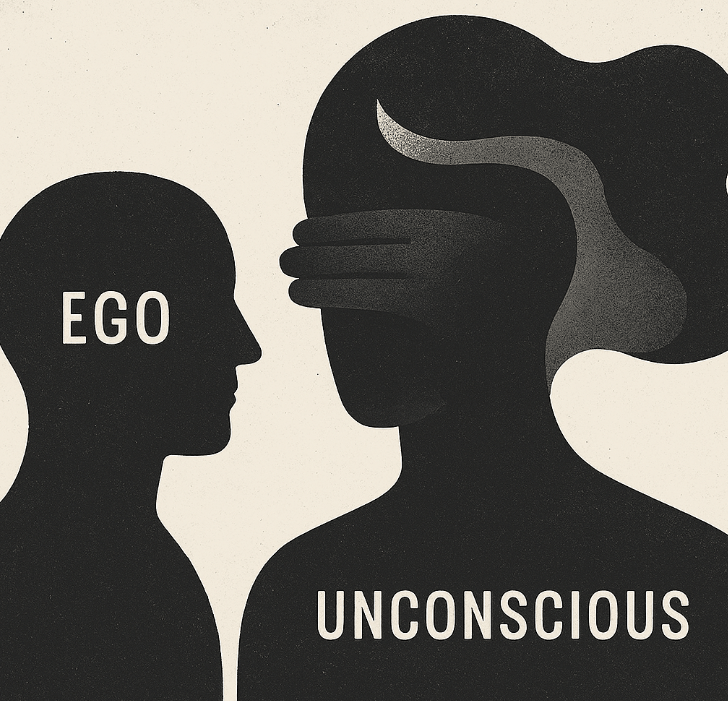
This is a subdued illustration predominantly in grayscale tones. The upper portion features the profile of a young man with his eyes closed, appearing to be in a calm, meditative state, seemingly symbolizing the conscious ‘ego’. Below his shoulders, a dark, shadowy area begins, within which the faint face of the other man looks directly forward. This image of the girl can be interpreted as a visual representation of the ‘unconscious’ mind, hidden beneath the man’s consciousness and sometimes difficult to perceive. Overall, it conveys a profound meaning, hinting at the relationship between the conscious self and the unconscious residing within, or the way repressed emotions manifest.
Choreography Expressing the Pain of Self-Loss
In this song, the choreography must be highlighted.
Initial choreography: The scene where Shownu covers Hyungwon’s eyes and mouth is impressive. It looks like the ego suppressing its original senses and expressions to conform to external gazes. The unconscious might have tried to speak to the ego repeatedly, but the ego chose to be ‘loved by the outside world’ even if it meant losing itself, by covering its own eyes and mouth. This scene is a visual metaphor for self-repression.
Later choreography: Very intense choreography combined with heavy, thunder-like harmonies creates a dreamy atmosphere. This seems to visually represent the ego’s unstable state of yearning for external love and trying to change to meet others’ expectations, and the pain of self-loss. In particular, it seems to fully capture the irony that the ego’s efforts bring temporary pleasure and a sense of accomplishment, but ultimately lead to a self-destructive conclusion. Since Shownu participated in the choreography, it feels like he understood the song well, perhaps because it was created by his fellow member.
2:53~2:55 Choreography: Oh! What happened in those two short seconds? First, the sound of glass breaking is heard. This sound is the sound of the ego cracking. It seems to be an auditory representation of the moment the ego, trying to conform to external expectations, reaches its limit and finally collapses. You might have seen the image of a ‘persona’ (mask) cracking on someone’s face, a common visual when the term ‘persona’ is used. This scene immediately comes to mind. Matching this sound, Shownu and Hyungwon perform choreography where they face each other, extending opposite arms to form a perfect symmetry.
This almost-touching distance seems to represent the unconscious constantly reaching out to the ego, but the ego trying to maintain that precise distance without getting too close. The short sigh that follows, though easily missed, leaves a deep lingering impression. It evokes two possibilities. One is the ego, unable to approach, suddenly sensing the unconscious. It might not be an ‘external breath’ but rather a sigh that briefly escaped from the small, suppressed emotions of the ego itself. The other is the unconscious’s sigh. ‘As expected… again…’ It seems to be the final expression of despair from the unconscious about the ego choosing the external world once more. As those who have watched the stage know, their choreography ultimately fails to reach complete integration, even until the very end. The ego and the unconscious turn their backs on each other.
Last Choreography: Before Shownu’s eyes and mouth are covered, Shownu and Hyungwon face opposite directions and reach out their hands. It seems the ego and the unconscious have truly decided to walk separate paths. Finally, Shownu’s senses completely disappear. The unconscious has now closed its language and entered a deep silence. The ego has become isolated in this way.
It’s a tragedy.
Tragedies leave a deep and lasting impression
It suddenly occurred to me how fortunate it is that K-Pop includes dance alongside its music and songs. It truly allows for a wider range of emotions to be felt about a piece, enriching its interpretation.
“Love Me A Little” demonstrates a remarkable balance at the intersection of popular appeal and artistic depth. On the surface, it’s a dreamy and emotional love song with sensual performances, but beneath lies a more intricate and complex topography of self-psychology. While it outwardly expresses a desire to be loved by another, its deeper core layers contain suppression, self-distrust, self-pity, and the anxieties of modern individuals, lack of self-love, self-destruction due to perfectionism, and the cries of an unhealed inner child.
All these emotions are revealed through this song.
In short, this song is, for me, a small whisper from the depths of the unconscious and a self-confession that the ego ultimately ignored. Rather than simply saying “this song is good,” I personally would call this song “musical psychology” (I can’t think of a better phrase) that questions self-understanding and self-care.
Since Hyungwon has been discharged from the military (his discharge date was actually on my birthday!), I’m eagerly looking forward to more music that stirs my heart like this.
Thank you for patiently reading this long article. If you’ve read this far, it means your concentration is excellent. ^^
[Inquiries]
zuozhe0513@gmail.com
geumjooeun_insta DM (Direct Message on Instagram)
 금주은 하우스
댓글 남기기